
Even though it is completely normal at the early stages of job searching to send hundreds of applications and hear nothing back, it is still an awful feeling that leaves you wondering what you can do to change your circumstances. You know you need to have something to stand out, you know you need to be talking to the right people. If you are looking for a job, you have probably heard people advise over and over again that you need to network. And, sure, networking is important, with 39% of UK workers finding their job through their network and 1 in 4 hiring managers being more likely to hire a referral over an unknown applicant. This is part of what we call the hierarchy of hiring, you can learn more about it on our blog post.
It’s no surprise career advisers are pushing the concept of networking. But no one ever actually explains how to do it.
This is a familiar story, especially if you are an international student. You’re in a new place with seemingly no connections and have no idea how to get talking to the right people. 39% of international students don’t even complete any work experience during their courses in the UK, drastically cutting down their chances to network organically in local workplaces.
Networking is meeting and chatting to people, that should be easy enough to do, right? But who should you be meeting? Where? And what should you be chatting to them about?
In this post, we’ll try to answer these questions and try to demystify the concept of networking by diving it into the 7 Golden Rules of networking for UK management students and graduates.
Rule 1. Start With Your Immediate Connections
Who do I even talk to?
Starting to network can feel like a vague, almost impossible task. Talking to strangers can be overwhelming and it can seem like the connections we need to make are very out of reach. This is why it is important to start small, you never know who might have a connection or a useful lead. Asking family and friends is a helpful and crucial first step.
When people around you know you are looking for a job, it means they can keep you in mind if anything pops up, or they can mention you in conversation with someone else who happens to have a connection.
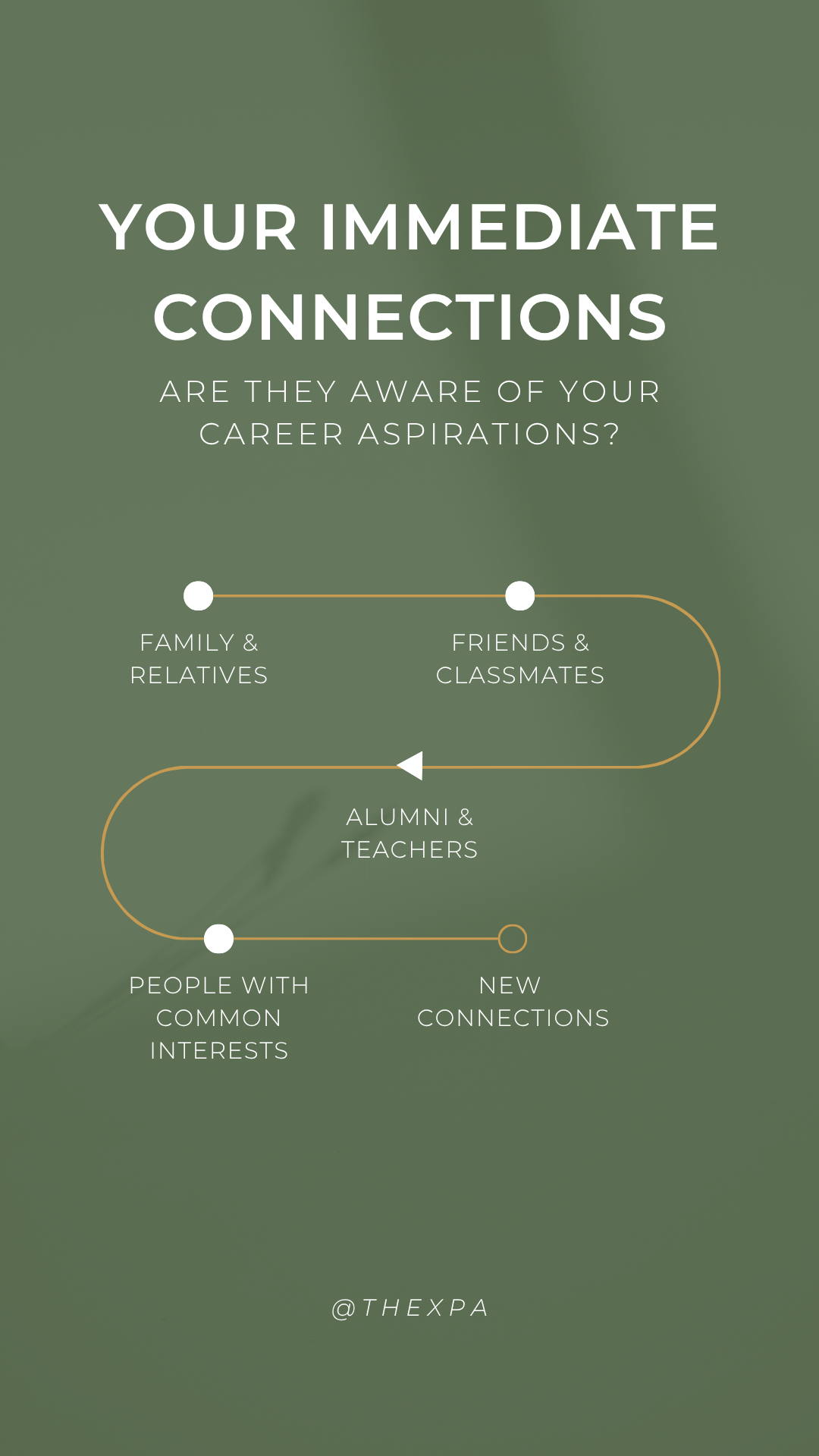
Look at social media to find useful contacts you already have. Family, friends, classmates, alumni, teachers, people from your own country, people from university societies, people you share common interests with. Any of these people could be the link that connects you with a great opportunity. Make your intentions clear for successful results. The most important thing is that you let them know your career goals and aspirations.
Networking isn’t just about asking if someone has a job for you, it’s about forming that connection that you can both utilise in the future. Don’t expect immediate results, but growing your network starts small and takes time.
Rule 2. Understand Your Channels
Where do I go?
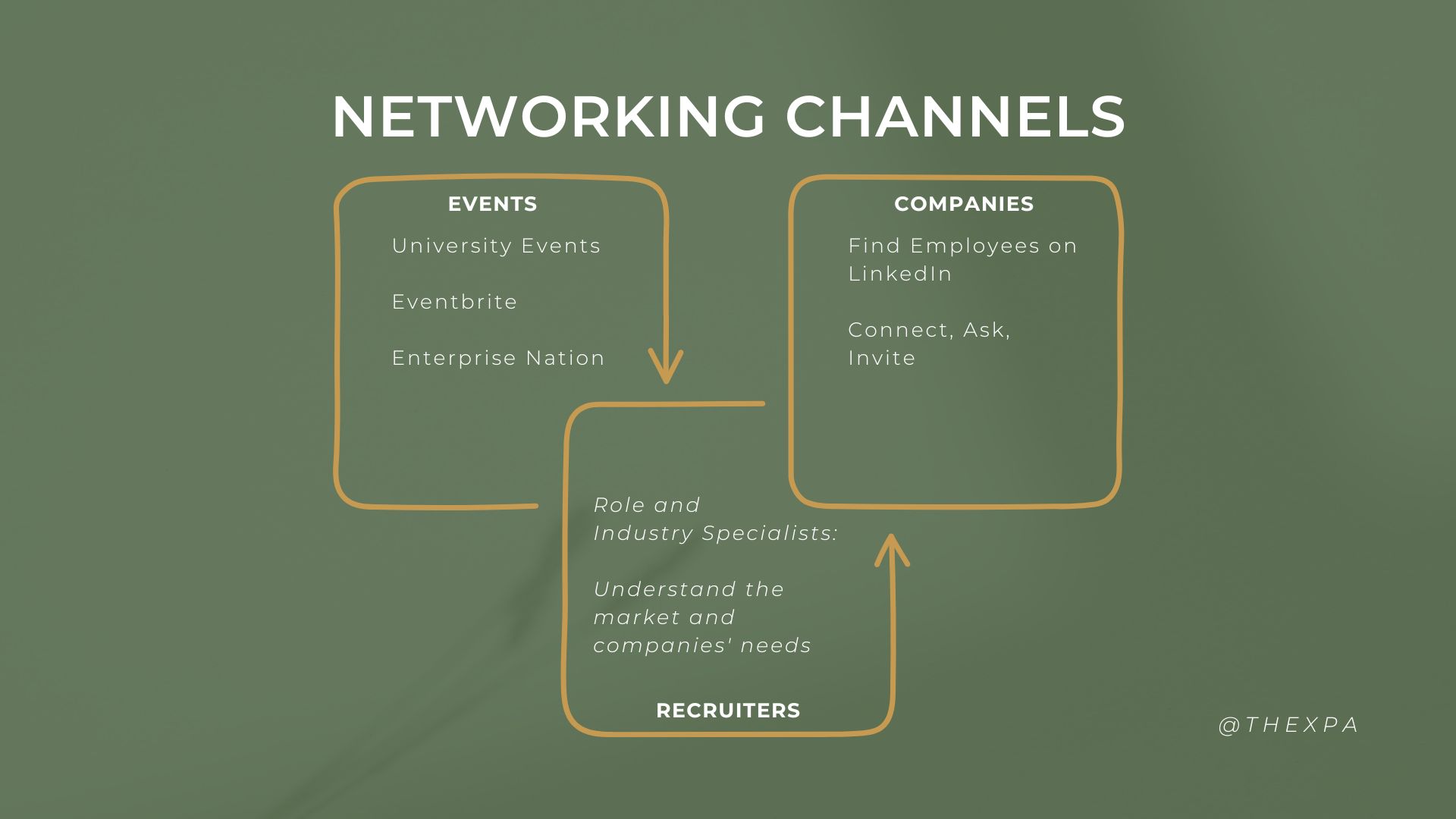
There are many different places to go to make connections, it is important to understand what they are in order to successfully network. There are three different types of networking channels: events, recruiters and companies.
Events
There are many events in person or online that can serve as a great place to meet people. As a anagement student, you can start with university and go beyond. Universities offer great opportunities to meet people through recruiters and events. You never know who has access to that opportunity you need. Universities offer careers fairs, subject-related societies, alumni networks … and, of course, you can connect with lecturers and tutors. All these events and people are potential networking opportunities.
But what about beyond university?
To build a successful network you have to look outside of university as well. There are career resources online that can be helpful as they advertise online and in-person events. Certain companies might have networking opportunities themselves (make sure you follow them on social media). Your local authorities might also have different kinds of professional events you can join.
Recruiters
Recruiters sometimes have access to opportunities that are otherwise not advertised, so it is useful to have them as a contact. But they also have inside knowledge of your sector and the market and can help you understand how to navigate your career search with more inside knowledge. They can offer interview tips and sometimes feedback, which can help you grow in your application process. However, bear in mind that recruiters are being paid by the employer to fill a job.
Companies
You should also consider researching organisations you are interested in and looking at the company’s LinkedIn. You can look for employees which could be useful to connect with, but you can also learn a lot from looking at their career history and progression. What does their journey to that role look like? Is there something similar you could be doing? You can also connect with these people, ask them questions, learn from them.
LinkedIn’s research found that 85% of Millennials and 87% of Gen X professionals say they’d be willing to offer advice or support to someone just starting out in their career, even if they’d never met them before. So, don’t assume people aren’t willing to help!
When applying for a job, it can also be helpful to find out who the recruiter is and contact them immediately. It is a lot more personal. If you can get to speak to someone, you can show them your enthusiasm for the company and maybe even get some referrals.
Rule 3. Don’t Ask for a Job. Build a Relationship
How do I ask them for a job?
This is a common mistake when networking. It is very important that in your first interaction you should not ask for a job, you should show you’ve got the skills to excel in it. Asking for a job when networking tells the other person this is just transactional and if they do not have a job to offer you, which is likely, that ends the conversation straight away and closes the door to that relationship. Whereas if you build a relationship with a person, a job or a referral could be something that can happen for you in the future.
Networking isn’t about asking for an opportunity, it’s about building relationships with people who can certify your skills and recommend you to others. You need to learn about the industry, and you need to discover how you can improve yourself to be able to get that job. So, people that are already in the industry are the ones that are going to help you to get there.
Show curiosity, show you want to learn. Ask yourself what you want to learn about the industry or roles or companies that you want to be involved in. Asking for something small is a much better approach for networking.
Bear in mind, this is different from the first rule, where you want to tell your immediate network exactly what you are looking for. When you’re starting with your immediate network, they should know what exactly you’re looking for. But when you’re building your network in the industries and with professionals, it’s more about building a relationship and an understanding.
Rule 4. Don’t Pitch Yourself. Ask Questions.
How do I sell myself?
Another common misconception, networking isn’t about selling yourself, it’s about asking questions.
In the same way you don’t want to immediately ask for a job, you also do not want to sound like a salesperson selling to someone without knowing what that person needs. Avoid selling to someone who has no need for the product (in this case, you). You have to understand what they want, what they need, and what’s happening. Focus on asking questions to learn this and also to build rapport and trust with that person.
You want to understand each other, you need to understand what the company needs, and they need to understand what you have to offer. And maybe the two align, but that’s something you need to work towards.
Rule 5. Research and Preparation.
How do I prepare?
It is important to research the companies and roles you’re interested in. Before you meet someone to establish a potential connection, learn as much as you can. You want to come across as knowledgeable and having a desire to learn more.
Think about why you’re interested in that company. Also think about how you can build your portfolio with the questions you’re going to ask that person. So, prepare beforehand and bring questions that will help you build your portfolio.
Learn about companies and opportunities in detail: what got someone to the position they’re in, was there a special trajectory they followed? A certificate they gained? What do you want to learn? Who do you want to learn from? What else can you do in your preparation, especially if you are going for a specific role or a specific target industry?
Notice if there is something in common that people with certain roles have, maybe a certificate for example, which you can then ask about.

Rule 6. Start Now. Plant the Seeds.
When should I start?
Don’t wait to network; start now. Networking should begin before you need it.
Start now. Networking is like planting seeds. Some of them sprout, some of them don’t. After graduation, you want things to progress quickly, you want to land that shiny graduate job as soon as possible, but it takes time. Companies are planning in advance and it’s not uncommon for them to have somebody in mind before even posting a job.
Also, only half of UK management graduates secure a relevant job 15 months after graduation. You want to minimise that 15 months and ideally, be in the half that finds a relevant job.
So, if you want to be that candidate, start now. You want to establish a connection early on because you’re not going to be asking for a job straight away, you need to build your relationship to a place where that conversation might come up. This requires time, so the earlier you start the better.
Rule 7. Value Exchange.
Why would they connect with me?
These connections cannot be one-sided relationships, we need to give something in exchange. This could be sharing insights, helping with projects or introducing someone to another contact.
It’s also important to keep building that relationship so that the other person feels they are getting something from you. It’s not just that person giving you something, keep giving value to them.
It can be with your knowledge, it can be with some time, it can be with giving them some contacts that might help them with something. But try to give that exchange that is very valuable for them.
This is about building connection, so ask questions and help each other. One of the questions that you could ask if they are hiring someone is, “Who are you looking for?” “Who is your ideal marketing executive in your perspective?” Make sure you are learning from each other and forming a relationship with mutual value exchange. It’s a connection, not a job application.
Platforms like Experiential Academy integrate value exchange into their programmes, connecting students and graduates with companies to provide them a consultacy style report with insights on how to improve their business. This system allows for more meaningful connection between business and student.
Conclusion
As daunting as it can be, it is important to put yourself out there and make new connections. It can start small with your friends and family but make sure you go beyond that in any way you can. And when you’re in the room with the right person, don’t just think about what they can offer you, think about building the relationship, learning, and seeing what you can offer them as well.
XPA is helping management students and graduates make meaningful connections, exchanging value with company directors while training on business consulting practices. We train the next generation of management consultants in collaboration with UK businesses and startups.
Don’t wait to connect; find out more about XPA student-business projects and consulting workshops.